A few thoughts on how CPSC and the townhouse projects could be filmed, put together after our conversation, and the reasoning behind the samples I'm sending along with this.
Here's how I understood each project, in my own words, please correct anything I've gotten wrong.
Built around cancer patients and the people supporting them, and designed on purpose so it doesn't feel institutional: a place where staff, patients and the public cross paths and meet, formally and informally, rather than a clinical hallway you pass through.
Both about proximity by design: shared courtyards, a mews-inspired laneway, units that open directly onto common space, so neighbours end up crossing paths instead of disappearing behind their own front doors.
Architecture films tend to default to one of two modes: a walkthrough of finishes and angles, or an interview explaining the thinking behind the design. Both describe the building, and yet neither shows what it's actually like to live and experience the spaces and the design, which is the part people actually resonate with and feel something.
As I understand it, we want to show the human experience these design choices have produced, what it really feels like to be inside these buildings. In CPSC's case, that means what it feels like to be cared for and to be understood. In the townhouses' case, it means what it feels like to be truly at home and in a community among neighbours. The stories and emotion experienced through these buildings are ephemeral, like life itself. Capturing them takes spending real time in a place until they surface on their own.
- Follow real people, in the buildings and courtyards themselves, for long enough that a story finds itself rather than being staged for the camera.
- Build the film around one throughline, a family, a day, a season, and tell a story people can relate to, rather than stringing together a reel of pretty moments.
- Let the space prove itself through how people actually use it, instead of having someone explain what it was designed to do.
- Bring the same instinct behind my own documentary work: BM Series, a Canada Council-funded project about music and the personal stories behind it, and Bread, an earlier project built the same way around food. Both come from showing up, spending real time, and finding the story that's already there.
These aren't previews of the final film, think of them as ingredients. What we'd build for Shape would draw from all of them: the warmth of the community pieces, the sensitivity of the Safe-Hub film, and the same instinct for shaping a story that built Charlotte Wall.
A support space, filmed through the people it's designed for
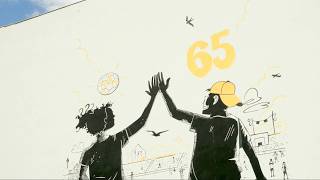
Community, unstaged, music-led
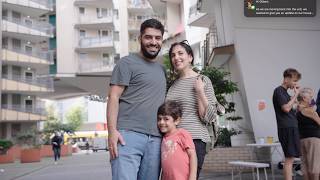

One story, pulled from a scattered subject
If it would also help to have someone from Shape speaking to the thinking behind a project, that's a format I can bring in too, alongside this approach rather than instead of it. Two examples: Jobst Berg on the Totem at ICON, and a walk through the amenities at ICON, with Barbara Lipka and Florian Wiedey.
- Real access to residents and families, with consent handled properly.
- Enough time on site that people forget the camera is there.
- A throughline chosen before the first day of shooting, not stitched together afterward in the edit.